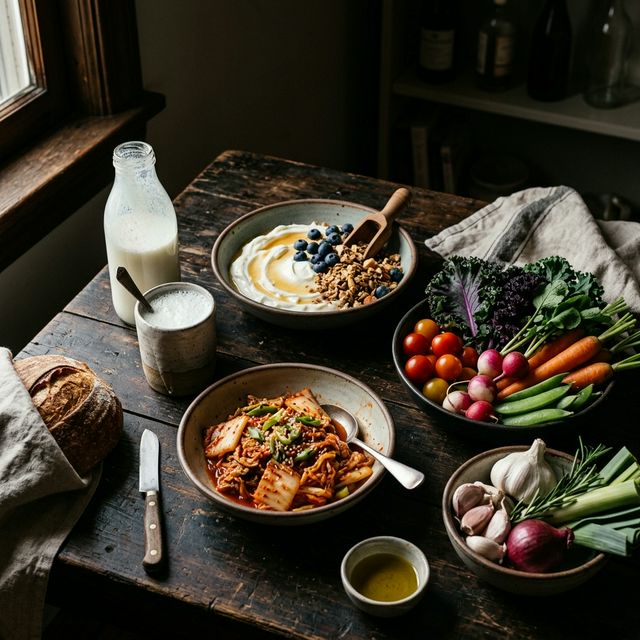
Your gut is basically running the show and you didn't even know it. That 30-foot tube snaking through your abdomen isn't just digesting last night's dinner — it's influencing your mood, your immune system, your weight, your skin, your sleep, and even your risk of diseases you won't develop for another 20 years.
Inside that gut lives a bustling city of around 100 trillion bacteria — collectively called your microbiome. Some of them are allies. Some are troublemakers. And the balance between the two? That comes down almost entirely to what you feed them.
This guide covers the 25 best foods for gut health — the stuff that makes your good bacteria thrive — and the 7 worst foods that wreck the balance. No gimmicks, no expensive supplements, just real food you can find at any supermarket.
Probiotics vs. Prebiotics: You Need Both
Before we get into the food list, let's clear up the most common confusion in gut health. You've probably seen both words on yoghurt labels and supplement bottles, but they do completely different things:
- Probiotics are live beneficial bacteria that you eat. Think yoghurt, kefir, kimchi, sauerkraut. They're like reinforcements — fresh troops parachuting into your gut to help the good guys.
- Prebiotics are types of fibre that feed the good bacteria already living in your gut. Think garlic, onions, bananas, oats. They're the fuel supply — keeping the good guys strong and multiplying.
You need both. Probiotics without prebiotics is like sending soldiers into battle without food. Prebiotics without probiotics works if your existing gut bacteria are healthy, but if your microbiome is already compromised, you need the reinforcements too.
The 25 Best Gut Health Foods
🥛 Probiotic-Rich Foods (live beneficial bacteria)
- Plain yoghurt — Look for "live active cultures" on the label. Skip the flavoured kind — it's loaded with hidden sugar that feeds the bad bacteria.
- Kefir — Like drinkable yoghurt but with 3x the probiotic diversity. Contains up to 61 different bacterial strains. Absolute gut health powerhouse.
- Sauerkraut (unpasteurised) — Fermented cabbage packed with Lactobacillus bacteria. The key word is "unpasteurised" — the heat-treated stuff on supermarket shelves has no live cultures. Find it in the fridge section.
- Kimchi — Korea's fermented vegetable side dish. Loaded with lactic acid bacteria and has impressive anti-inflammatory properties. Add it to rice bowls, tacos, or eat it straight from the jar.
- Kombucha — Fermented tea with a decent dose of probiotics. Watch the sugar content though — some brands add loads of it after fermentation, which defeats the purpose.
- Miso — Fermented soybean paste used in Japanese cooking. A tablespoon in hot water makes a gut-healing broth in 30 seconds. Just don't boil it — that kills the live cultures.
- Tempeh — Fermented soybeans with a nutty, firm texture. Higher in protein than tofu and loaded with probiotics.
- Traditional pickles (lacto-fermented) — Cucumbers fermented in salt water (not vinegar). Look for them in the refrigerated section.
🧅 Prebiotic-Rich Foods (fuel for good bacteria)
- Garlic — Contains inulin and fructo-oligosaccharides (FOS) that selectively feed Bifidobacteria. Raw garlic is most potent, but cooked still counts.
- Onions — One of the richest prebiotic sources. The inulin in onions increases beneficial bacteria by up to 10x in studies.
- Leeks — Same family as garlic and onions, same prebiotic punch. Brilliant in soups and stir-fries.
- Asparagus — High in inulin fibre. Roast it, grill it, or throw it in an omelette.
- Bananas — Slightly green bananas are especially rich in resistant starch, which acts as a prebiotic. As bananas ripen, the resistant starch converts to sugar, so slightly under-ripe is better for your gut.
- Oats — Beta-glucan fibre in oats feeds beneficial gut bacteria and increases short-chain fatty acid production. Steel-cut or rolled — not instant.
- Chicory root — Contains the highest concentration of inulin of any plant. Often used as a coffee substitute.
- Jerusalem artichokes — Don't be fooled by the name — they're not artichokes. They're small, knobbly tubers with a ridiculous amount of inulin fibre.
🥦 High-Fibre and Fermented Superstars
- Lentils — Packed with both soluble and insoluble fibre. A cup of cooked lentils delivers 16g of fibre — more than half your daily minimum.
- Chickpeas — Another fibre champion (12.5g per cup) that produces butyrate when fermented by your gut bacteria. Butyrate is the favourite fuel of your colon cells.
- Black beans — High in resistant starch and fibre. They literally make your good bacteria stronger.
- Flaxseeds — Ground flaxseeds provide fibre, omega-3s, and lignans — all of which support a healthy microbiome. Add a tablespoon to smoothies, oats, or yoghurt.
- Apple cider vinegar (with "the mother") — Contains beneficial bacteria and acetic acid. Small amounts before meals have been shown to improve digestion and reduce blood sugar spikes.
- Bone broth — Rich in glutamine, an amino acid that helps repair the intestinal lining. Particularly useful if you suspect leaky gut.
- Dark chocolate (70%+) — The polyphenols in cocoa are fermented by gut bacteria into anti-inflammatory compounds. A couple of squares a day is actually good for your gut. You're welcome.
- Almonds — Almond skins are rich in polyphenols that increase Bifidobacteria and Lactobacillus populations.
- Extra virgin olive oil — Polyphenols in EVOO reduce inflammation and promote growth of beneficial Lactobacillus bacteria.
Track Your Gut-Healing Diet
Wondering how much fibre and sugar you're actually eating? SugarWise tracks it all — calories, sugar, macros — so you can make sure you're feeding your good bacteria, not the bad ones.
The 7 Worst Foods for Your Gut
Now for the villains. These foods don't just fail to help your gut — they actively damage it, killing off beneficial bacteria and feeding the troublemakers.
| Food | How It Wrecks Your Gut |
|---|---|
| Added sugar / HFCS | Feeds harmful bacteria and Candida yeast; starves fibre-loving good bacteria; promotes leaky gut |
| Artificial sweeteners | Alter microbiome composition; studies show sucralose and aspartame reduce Lactobacillus populations |
| Ultra-processed foods | Emulsifiers (polysorbate-80, carboxymethylcellulose) thin the gut's protective mucus layer; full guide here |
| Excessive alcohol | Damages gut lining; allows endotoxins to leak into bloodstream; disrupts microbial balance |
| Refined grains | Stripped of fibre; spikes blood sugar without feeding beneficial bacteria |
| Fried foods | Difficult to digest; promote growth of inflammatory bacteria |
| Processed meats | Contain nitrates, preservatives, and saturated fat that promote inflammatory gut bacteria |
💡 The Sugar Connection
Notice that sugar sits right at the top of the gut-wrecking list. This is one of the most underappreciated connections in nutrition: excess sugar doesn't just cause weight gain and blood sugar spikes — it fundamentally alters the composition of your microbiome, creating an environment where bad bacteria thrive and good bacteria starve. Cutting added sugar is arguably the single most impactful thing you can do for your gut. Here's exactly how much you should aim for.
Your 5-Day Gut Reset Meal Plan
Want to give your gut a jump-start? Follow this for five days and pay attention to how you feel. Most people notice less bloating, better energy, and improved digestion within the first few days.
| Day | Breakfast | Lunch | Dinner | Snack |
|---|---|---|---|---|
| 1 | Overnight oats + flaxseeds + banana | Lentil soup + sourdough | Salmon + roasted asparagus + quinoa | Kefir + almonds |
| 2 | Greek yoghurt + berries + chia | Chickpea salad + garlic dressing | Stir-fry with tempeh + onions + brown rice | Apple + almond butter |
| 3 | Smoothie: banana + oats + kefir + flax | Miso soup + edamame + kimchi rice | Chicken + leek + black bean bowl | Dark chocolate + walnuts |
| 4 | Eggs + sautéed onions + sourdough | Black bean tacos + sauerkraut + avocado | Bone broth risotto + roasted garlic | Kombucha + oatcakes |
| 5 | Oat porridge + cinnamon + almonds | Mediterranean bowl + hummus + EVOO | Grilled fish + Jerusalem artichokes | Yoghurt + banana |
Gut Health FAQs
What are the top 3 foods for gut health?
(1) Plain yoghurt or kefir — live probiotics that directly replenish your beneficial bacteria. (2) Garlic and onions — powerful prebiotics that feed the good guys. (3) High-fibre vegetables like artichokes and asparagus — packed with inulin, one of the most potent prebiotic fibres. Eat these consistently and you're doing more for your gut than any supplement.
Can gut health affect weight loss?
Yes, and the science on this is fascinating. People with diverse, healthy microbiomes tend to be leaner. Your gut bacteria influence calorie extraction, fat storage, hunger hormones, and even food cravings. In one study, transplanting gut bacteria from lean people into obese individuals improved their metabolic markers. Feed your gut well and weight management gets a whole lot easier.
Does sugar damage gut health?
Big time. Excess added sugar feeds harmful bacteria and yeast (especially Candida) while starving the good bacteria that need fibre. The result is dysbiosis — a microbiome imbalance that increases gut permeability ("leaky gut"), triggers systemic inflammation, and has been linked to everything from IBS to autoimmune conditions to depression. Cutting your sugar intake is one of the fastest ways to improve gut health.
The Bottom Line
Your gut isn't just a food-processing plant. It's a command centre that influences virtually every system in your body. And the incredible thing is, you can start reshaping your microbiome in days, not months. The bacteria in your gut respond almost immediately to dietary changes.
Focus on three things: more fermented foods, more fibre, less sugar. That's it. You don't need expensive probiotic pills. You don't need to follow some elaborate protocol. Just eat more of the 25 foods on this list, cut back on the 7 that do damage, and your gut will repay you with better digestion, more energy, clearer skin, stronger immunity, and a happier brain.
Start today. Your 100 trillion bacteria are waiting.
Feed Your Gut Right — Track With SugarWise
See exactly how much fibre and sugar you're eating every day. SugarWise makes it dead simple to build gut-friendly habits that last.