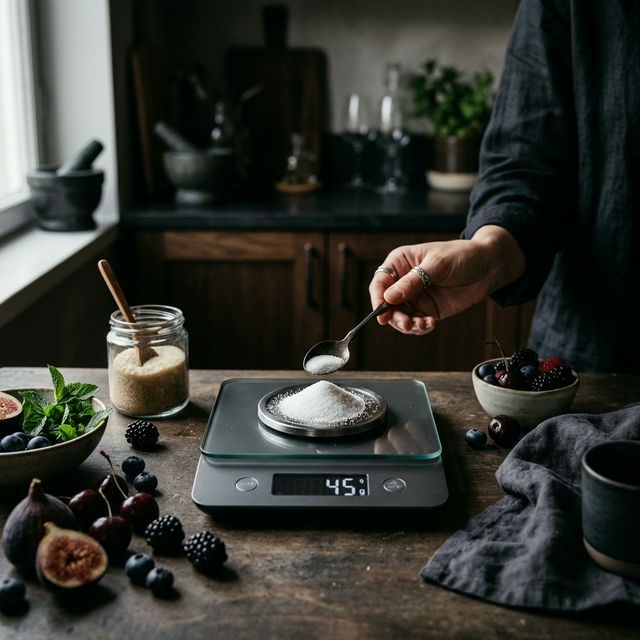
"How much sugar is too much?" It's one of the most googled health questions on the planet — and the answer you'll get depends entirely on who you ask. Your gym buddy says zero. That TikTok nutritionist says fruit is fine. Your nan says "a little bit never hurt anyone." So who's right?
Turns out, the actual science is pretty clear. And the numbers are a lot lower than most people think. Let's cut through the noise and break down exactly how much sugar you should eat per day, what counts as "sugar," and — crucially — how to actually stay under the limit without making yourself miserable.
The Official Numbers: What Every Major Health Body Recommends
Let's start with the hard numbers. These are the official daily sugar limits from the organisations that spend millions of dollars researching this stuff:
| Organisation | Who | Daily Added Sugar Limit | In Teaspoons |
|---|---|---|---|
| WHO (ideal) | All adults | 25g | ~6 tsp |
| WHO (maximum) | All adults | 50g | ~12 tsp |
| AHA | Women | 25g | 6 tsp |
| AHA | Men | 36g | 9 tsp |
| AHA | Children (2-18) | 25g | 6 tsp |
| NHS (UK) | Adults | 30g | 7 tsp |
| NHS (UK) | Children (7-10) | 24g | 6 tsp |
| NHS (UK) | Children (4-6) | 19g | 5 tsp |
| All bodies | Children under 2 | 0g | 0 tsp |
Read that last row again. Zero. Every major health body agrees that children under two should have absolutely no added sugar. Yet walk through the baby food aisle and you'll find fruit purées with 12g of sugar per pouch being marketed to 6-month-olds. Something doesn't add up.
Wait — What Counts as "Sugar"?
This is where it gets confusing for most people, so let's clear it up right now.
When health organisations say "limit your sugar," they're talking about free sugars (WHO's term) or added sugars (AHA/FDA's term). These include:
- Any sugar added to food or drinks by manufacturers, cooks, or you at home
- Sugar in honey, syrups, and agave (yes, even the "natural" ones)
- Sugar in fruit juice and smoothies (even 100% juice with no added sugar)
- Every one of the 60+ names for sugar on food labels
What doesn't count:
- Sugar naturally present in whole fruits (it comes with fibre that slows absorption)
- Lactose naturally present in plain milk and unsweetened yoghurt
- Sugar in whole vegetables
🍎 So Is Fruit Sugar Bad?
No. And anyone telling you to avoid fruit is being ridiculous. An apple contains about 19g of sugar, but it also has 4.4g of fibre, water, vitamins, and polyphenols that completely change how your body processes that sugar. You'd need to eat 8-10 apples in one sitting to cause the same metabolic impact as a single can of Coke. Eat your fruit. Skip the juice.
How 25 Grams Disappears Before Lunch
Here's the thing that shocks everyone. Twenty-five grams sounds like a reasonable amount until you start actually measuring. Watch how fast it vanishes:
- A bowl of "healthy" granola: 12g — that's half your day, gone
- A flavoured latte from a coffee shop: 25-35g — your entire day's allowance in one drink
- Two tablespoons of ketchup: 8g
- A "low-fat" fruit yoghurt: 19g
- A glass of orange juice: 21g
- A Starbucks Caramel Frappuccino (Grande): 57g
See the problem? You could eat "healthy" all day — granola for breakfast, a yoghurt snack, a coffee, pasta with jarred sauce — and blow through three times the WHO limit without ever touching a chocolate bar or a can of Coke. That's the hidden sugar trap, and it catches millions of people.
Find Out Your Real Number
Most people massively underestimate their sugar intake. SugarWise tracks it automatically — log your meals and see your exact daily total in real time. No guesswork. No surprises.
What Happens When You Eat Too Much Sugar?
Exceeding the recommended limit occasionally — like at a birthday party — isn't going to hurt you. The problem is the daily excess. When you consistently eat 70-100g of sugar per day (which most people do), here's what happens inside your body:
- Weight gain: Excess sugar gets converted to fat, especially visceral fat around your organs. Sugar doesn't trigger satiety hormones the way protein and fat do, so you eat more without feeling full.
- Insulin resistance: Your pancreas gets overworked pumping out insulin to handle constant blood sugar spikes. Eventually, your cells stop responding — the first step toward type 2 diabetes.
- Chronic inflammation: Sugar triggers pro-inflammatory pathways, contributing to heart disease, joint pain, skin problems, and depression.
- Liver damage: Fructose is metabolised exclusively by your liver. Overload it and you get non-alcoholic fatty liver disease — now affecting roughly 25% of adults globally.
- Tooth decay: Still the most common chronic disease in children and adults worldwide.
- Brain impact: Excess sugar impairs memory, learning, and cognitive function. Your brain is highly vulnerable to glucose damage.
8 Realistic Ways to Stay Under the Limit
Nobody's asking you to give up sugar entirely (nor should they). The goal is to get from the average of 77g down to somewhere in the 25-36g range. Here's how real people actually do it:
1. Kill the Liquid Sugar
This is the single highest-ROI change. Fizzy drinks, fruit juice, sweetened tea, fancy coffee drinks, and sports drinks account for nearly half of all added sugar consumption. Replace them with water, sparkling water, herbal tea, or black coffee and you've already cut your intake in half.
2. Read Labels (the Ingredient List, Not Just the Front)
Marketers are geniuses at making sugary products look healthy. "All natural." "No artificial sweeteners." "Made with real fruit." None of those mean low sugar. Flip the package over and look at the actual grams of added sugar per serving.
3. Swap Your Breakfast
Cereal, granola, toast with jam, and flavoured yoghurt are sugar bombs disguised as breakfast. Switch to eggs, plain Greek yoghurt with fresh berries, or overnight oats with no added sweetener. You'll feel fuller for longer and dodge 15-30g of sugar before 9am.
4. Make Your Own Sauces
Pasta sauce, barbecue sauce, ketchup, and salad dressings are hidden sugar landmines. Homemade versions take 5 minutes and contain a fraction of the sugar. A tin of tomatoes, garlic, olive oil, and basil makes a pasta sauce with zero added sugar.
5. Use the "One Sweet Thing" Rule
Allow yourself one sweet thing per day — a small piece of dark chocolate, a biscuit with coffee, a scoop of ice cream after dinner. Just one. You'll still enjoy something sweet without the cumulative damage of sugar at every meal.
6. Hydrate Before You Snack
Thirst can disguise itself as sugar cravings. Next time you're reaching for something sweet, drink a large glass of water first and wait 15 minutes. Half the time, the craving disappears.
7. Sleep 7-8 Hours
Sleep deprivation increases ghrelin (the hunger hormone) and reduces leptin (the fullness hormone), making you crave sugar and carbs the next day. Getting proper sleep is genuinely one of the best sugar-reduction strategies there is.
8. Track It
Awareness changes behaviour. Track your food for one week — just seven days — and you'll have a crystal-clear picture of where your sugar comes from. Most people find 2-3 massive sources they can cut easily, bringing their daily total down 30-50% with minimal effort.
Sugar Intake FAQs
How many grams of sugar per day is recommended?
The WHO recommends 25g (6 teaspoons) for optimal health, with a hard maximum of 50g (12 teaspoons). The AHA says 25g for women, 36g for men. The NHS says 30g for adults. For children aged 2-18, no more than 25g. For children under 2: zero.
Is fruit sugar bad for you?
No — not in whole fruit. The fibre, water, and micronutrients in whole fruit completely change how your body handles the sugar. The concern is with free sugars: juice, honey, syrups, and anything added during processing. Eat fruit freely. Drink juice sparingly.
How do I know how much sugar I'm eating?
Use a tracking app like SugarWise, which logs your meals and calculates your total automatically. Or check nutrition labels — look for "Added Sugars" on the Nutrition Facts panel (US) or "of which sugars" under Carbohydrates (UK/AU). Over 12g of sugar per 100g is considered high.
The Bottom Line
The magic number is 25 grams. That's 6 teaspoons. It's less than you think, and you're probably eating three times that amount without realising it. The good news? You don't have to go cold turkey. Cut the liquid sugar, make a few smart swaps, read your labels, and track what you eat for a week. Small changes, massive results.
Your body gives you so many signals when you're eating too much sugar — the crashes, the cravings, the brain fog, the stubborn weight. Once you start paying attention and making intentional choices, those signals disappear. And that's when you realise how good you're actually supposed to feel.
Start Your Sugar-Tracking Journey Today
SugarWise tells you exactly how many grams of sugar you eat every day — and shows you where to cut. Set your goal. Track your meals. Watch the number drop.