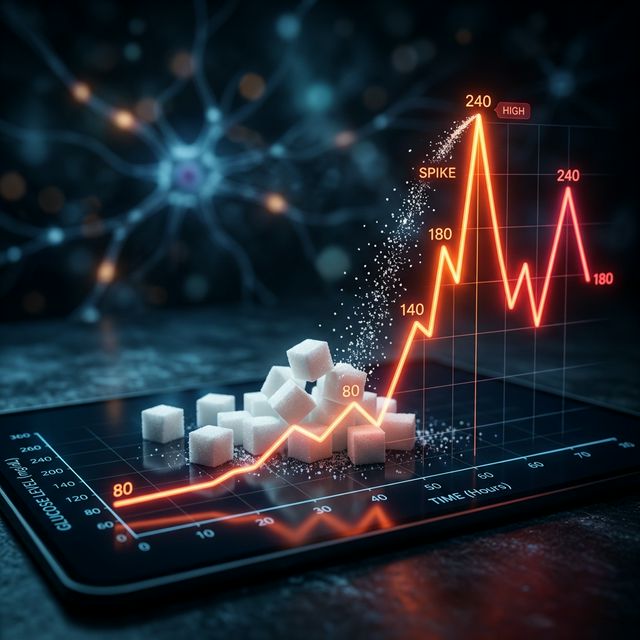
You know that feeling. You eat lunch — maybe a sandwich, maybe a bowl of pasta — and an hour later you're fighting to keep your eyes open at your desk. Your brain turns to mush. You're irritable. You'd sell a kidney for something sweet. Then, almost magically, the feeling passes... until the same thing happens again after dinner.
That's not laziness. That's not "just getting older." That's a blood sugar spike followed by a crash, and it's happening to millions of people every single day without them ever connecting the dots.
Here's why it matters: those spikes aren't just uncomfortable. A growing mountain of research — including a bombshell 2026 study linking post-meal glucose spikes to Alzheimer's risk — shows that repeated blood sugar spikes cause real, cumulative damage to your blood vessels, your brain, your organs, and your waistline. The good news? You can stop most of them with a few dead-simple changes that don't require you to give up carbs or go on some miserable diet.
What Actually Happens During a Blood Sugar Spike?
Let's break this down without the medical jargon. When you eat carbohydrates — bread, rice, fruit, sugar, potatoes, anything starchy or sweet — your body breaks them down into glucose. That glucose enters your bloodstream, and your blood sugar rises. Your pancreas then pumps out insulin, which acts like a key: it unlocks your cells so they can absorb the glucose and use it for energy.
When everything works smoothly, blood sugar rises gently, insulin does its job, and levels come back down within a couple of hours. No drama.
A spike is what happens when glucose floods your bloodstream too fast. Your blood sugar shoots up like a rocket — sometimes to double your baseline — and your pancreas panics, dumping a massive wave of insulin to bring it down. That insulin overshoot then crashes your blood sugar below normal, which is why you suddenly feel exhausted, foggy, and desperately hungry. It's a rollercoaster, and your body hates rollercoasters.
⚠️ Why Repeated Spikes Are Dangerous
Each spike triggers a burst of oxidative stress and inflammation in your blood vessels. Over months and years, this damages the lining of your arteries, promotes insulin resistance (where your cells stop responding to insulin properly), and dramatically increases your risk of type 2 diabetes, heart disease, fatty liver, and — based on the latest 2026 research — Alzheimer's disease. It's not the single spike that's the problem. It's the thousands of them, day after day, year after year.
7 Warning Signs You're Spiking (Without a Glucose Monitor)
You don't need a continuous glucose monitor to know if blood sugar spikes are a problem for you. Your body tells you — you just need to know what to listen for:
- Post-meal energy crash: Feeling suddenly exhausted 60-90 minutes after eating — especially after carb-heavy meals
- Brain fog: Difficulty concentrating, lost train of thought, sluggish thinking after meals
- Intense cravings: A desperate need for something sweet within 1-2 hours of eating a full meal
- Excessive thirst: Sudden, intense thirst that doesn't correspond to physical activity
- Mood swings: Becoming irritable, anxious, or short-tempered between meals
- Afternoon slump: A predictable energy dip between 2-4pm, regardless of how much sleep you got
- Stubborn weight gain: Difficulty losing weight despite eating "reasonably" — constant insulin spikes promote fat storage
If three or more of these sound familiar, your blood sugar is almost certainly part of the picture. Your brain is especially sensitive to these glucose swings.
The Biggest Spike-Causing Foods (Some Will Surprise You)
| Food | Glycemic Impact | Better Alternative |
|---|---|---|
| White bread | 🔴 Very High (GI: 75) | Sourdough or sprouted bread |
| White rice | 🔴 Very High (GI: 73) | Brown rice, quinoa, or cauliflower rice |
| Fruit juice | 🔴 Very High | Whole fruit (fibre slows absorption) |
| Instant oatmeal | 🟠 High (GI: 79) | Steel-cut or rolled oats (GI: 55) |
| Smoothie bowls | 🟠 High | Smoothie with protein powder + healthy fat |
| Breakfast cereal | 🔴 Very High (GI: 70-90) | Eggs, Greek yoghurt, or overnight oats |
| Dried fruit | 🟠 High (concentrated sugar) | Fresh fruit |
| Fizzy drinks | 🔴 Extreme | Sparkling water + lemon |
| Baked potatoes | 🔴 Very High (GI: 85) | Sweet potatoes (GI: 63) |
| Rice cakes | 🔴 Very High (GI: 82) | Oatcakes or whole grain crackers |
Notice something? Half of these foods are marketed as "healthy." That smoothie bowl you love? Without enough protein or fat, it's basically a sugar bomb with nice branding.
Know Your Sugar Numbers
SugarWise shows you exactly how much sugar and carbs you're eating per meal — so you can spot the spikes before they hit. Set daily goals and track trends over time.
10 Proven Ways to Prevent Blood Sugar Spikes
These aren't hypothetical tips from some wellness blog. Every single one is backed by peer-reviewed research — and most of them require zero willpower.
1. Eat Your Vegetables First
This one sounds too simple to work, but it's been validated in multiple clinical trials. Eating fibre-rich vegetables before your carbohydrates creates a physical barrier in your small intestine that slows glucose absorption. A 2015 study published in Diabetes Care found that eating salad before bread reduced the post-meal glucose spike by 73%. Seventy-three percent. From just changing the order you eat.
2. Add Protein and Fat to Every Meal
Never eat "naked carbs" — carbohydrates on their own without protein or fat. Adding eggs, cheese, nuts, avocado, or meat to a carb-heavy meal dramatically slows digestion and flattens your glucose curve. Toast on its own? Spike. Toast with avocado and eggs? Smooth, steady energy for hours.
3. Walk for 10 Minutes After Eating
Your muscles are glucose sponges, and they don't need insulin to absorb glucose when they're active. A 10-minute walk after a meal can reduce your post-meal spike by up to 30%. It doesn't have to be a power walk — a slow stroll to the coffee machine and back works. The research on this is rock-solid.
4. Take a Tablespoon of Apple Cider Vinegar Before Meals
Acetic acid in vinegar slows the rate at which food empties from your stomach and blocks some starch-digesting enzymes. Studies show it can reduce post-meal blood sugar by 20-34%. Dilute a tablespoon in water before meals — don't drink it neat or it'll wreck your tooth enamel.
5. Choose Sourdough Over Regular Bread
The fermentation process in real sourdough partially breaks down the starches, making them slower to digest. Sourdough bread produces a 25-30% lower blood sugar response than standard white bread, even when they contain the same amount of calories and carbs.
6. Don't Skip Breakfast
Skipping breakfast — or eating a carb-heavy one — sets the tone for your entire day. Research shows that a first meal with at least 25-30g of protein stabilises blood sugar for the next several meals. Think eggs, Greek yoghurt, or a protein-rich smoothie. Skip the cereal.
7. Get More Sleep
Just one night of poor sleep (less than 6 hours) reduces your insulin sensitivity by up to 25%. That means the same meal that barely causes a ripple when you're well-rested can trigger a massive spike when you're tired. This is why night-shift workers and chronic insomniacs have elevated diabetes risk.
8. Swap Juice and Smoothies for Whole Fruit
When you juice a fruit, you strip out the fibre — the exact thing that slows down sugar absorption. An orange contains about 12g of sugar with 3g of fibre. A glass of orange juice? 21g of sugar, zero fibre. Your body processes it almost identically to fizzy drink.
9. Add Cinnamon to Your Meals
Ceylon cinnamon has been shown in multiple studies to improve insulin sensitivity and lower fasting blood sugar. It won't work miracles, but sprinkling it on oats, yoghurt, or coffee adds up over time. Think of it as a free, zero-calorie metabolic assist.
10. Track What You Eat (Seriously)
You can't manage what you don't measure. Most people are wildly wrong about how much sugar they actually consume. Tracking for even a single week — logging every meal, snack, and drink — reveals the hidden spike-causing culprits you'd never catch otherwise.
Blood Sugar Spike FAQs
What does a blood sugar spike feel like?
The classic signs: sudden fatigue after meals, brain fog, intense thirst, headaches, mood swings, and sugar cravings within an hour or two of eating. Most people describe the crash phase as "hitting a wall" — that overwhelming urge to nap mid-afternoon.
What foods cause the biggest spikes?
White bread, white rice, sugary cereals, fruit juice, fizzy drinks, pastries, and anything with high-fructose corn syrup. But watch out for "healthy" foods too — instant oatmeal, smoothie bowls, dried fruit, and rice cakes can spike you just as hard.
How long does a blood sugar spike last?
A typical spike peaks about 60-90 minutes after eating and should return to baseline within 2-3 hours. If it takes longer, or if you experience frequent large spikes, it could signal insulin resistance — worth mentioning to your doctor.
Take Control of Your Blood Sugar Today
Blood sugar spikes aren't some niche concern for diabetics. They affect energy, mood, weight, brain function, and long-term disease risk for everyone. The average person spikes multiple times per day and has no idea it's happening — or that simple changes like eating vegetables first, walking after meals, and cutting hidden sugar could transform how they feel.
Start with one change this week. Just one. Eat your salad before your pasta. Walk around the block after dinner. Swap your morning juice for a whole orange. You'll feel the difference in days, not months. And once you feel it, you'll never go back.
Stop Guessing, Start Tracking
SugarWise makes it effortless to see how much sugar you're actually eating — and where the hidden spikes are coming from. Real-time tracking. Personalised goals. Zero guesswork.