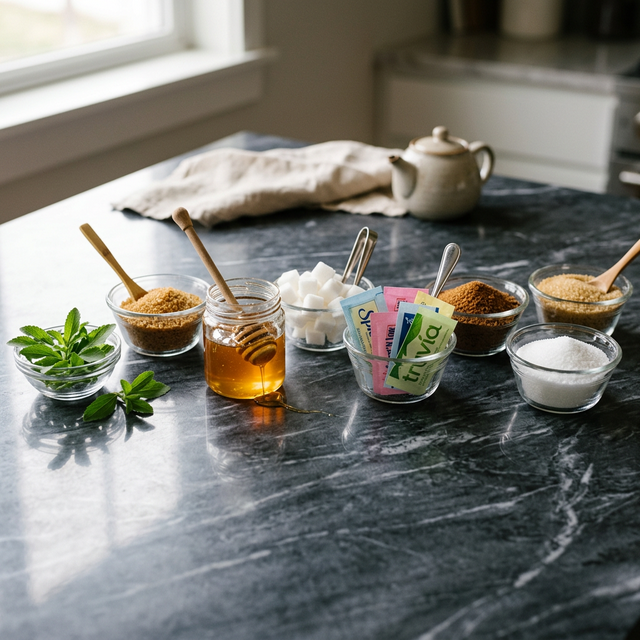
You've decided to reduce your sugar intake — great decision. But now you're standing in the supermarket aisle, staring at a dizzying array of sugar alternatives: stevia, monk fruit, erythritol, aspartame, sucralose, xylitol, agave, honey, coconut sugar, allulose... and wondering which one you should actually use.
The internet doesn't help. Search for "best sugar substitute" and you'll find stevia described as both a miracle and a scam, aspartame simultaneously declared safe by the FDA and dangerous by wellness blogs, and honey presented as either a health food or "just another form of sugar." The conflicting information is paralyzing.
This guide cuts through the noise with an honest, evidence-based comparison of every major sweetener on the market. No marketing hype, no fear-mongering — just the science, the trade-offs, and practical guidance on which sweetener makes sense for your specific goals.
Understanding Sweetener Categories
Before diving into individual sweeteners, it helps to understand the three main categories:
- Natural sweeteners are derived from plants or natural sources with minimal processing: stevia, monk fruit, honey, maple syrup, coconut sugar, and date sugar
- Artificial sweeteners are synthetically produced in laboratories: aspartame, sucralose, saccharin, and acesulfame potassium (Ace-K)
- Sugar alcohols are naturally occurring compounds found in some fruits and fermented foods, though commercially produced versions are synthesized: erythritol, xylitol, sorbitol, and maltitol
"Natural" doesn't automatically mean "healthier," and "artificial" doesn't automatically mean "dangerous." The reality is far more nuanced, and each sweetener has its own profile of benefits, risks, and best use cases.
Natural Sweeteners: Detailed Breakdown
Derived from the leaves of the Stevia rebaudiana plant, native to South America. Used for centuries by indigenous Guaraní people. The sweet compounds — steviol glycosides — are extracted and purified to create commercial stevia products.
Pros
- Zero calories and zero glycemic impact
- Plant-derived with a long history of use
- May have antioxidant properties
- Some research suggests blood pressure benefits
- Heat stable — works in cooking and baking
Cons
- Can have a bitter aftertaste (especially in large amounts)
- Highly processed — commercial stevia is far from the raw leaf
- Some brands mix with sugar alcohols or fillers
- Not great for recipes that need sugar's bulk/texture
Best for: Coffee, tea, smoothies, breakfast recipes, and any application where you need sweetness without calories or blood sugar impact.
Extracted from a small melon (Siraitia grosvenorii) native to southern China, where it's been used in traditional medicine for centuries. The sweet compounds are mogrosides, which are antioxidants.
Pros
- Zero calories, zero glycemic impact
- No bitter aftertaste (cleaner taste than stevia)
- Mogroside compounds have antioxidant properties
- Anti-inflammatory potential (preliminary research)
- Works well in beverages and light baking
Cons
- More expensive than most alternatives
- Often blended with erythritol or dextrose
- Limited research compared to stevia or aspartame
- Can be difficult to find pure versions
Best for: People who dislike stevia's aftertaste. Excellent in beverages, smoothies, and as a sugar swap in recipes.
The most ancient sweetener in human history. Raw, unprocessed honey contains enzymes, antioxidants, trace minerals, and antibacterial compounds. However, it's still primarily composed of glucose and fructose — the same sugars found in table sugar.
Pros
- Contains antioxidants and antibacterial properties (especially raw)
- Pre-biotic effects may support gut health
- Lower glycemic index than table sugar
- Rich, complex flavor adds depth to recipes
- Proven cough-suppressant properties
Cons
- Still high in calories and sugar (21g per tbsp)
- Almost the same metabolic effect as sugar when consumed in excess
- Many commercial honeys are ultra-processed or adulterated
- Not appropriate for infants under 12 months
Best for: Small amounts as a natural flavor enhancer. Not a significant improvement over sugar if you're using comparable quantities — the key is using less because of its more intense flavor.
Artificial Sweeteners: Detailed Breakdown
One of the most studied food additives in history, with over 200 studies examining its safety. Used in diet sodas, sugar-free gum, and thousands of products since 1981. Made from two amino acids (aspartic acid and phenylalanine).
Pros
- Extensively studied — over 200 scientific studies
- FDA-approved since 1981 with established safety record
- No effect on blood sugar or insulin
- Clean, sugar-like taste in beverages
Cons
- Breaks down in heat — not suitable for baking
- WHO classified as "possibly carcinogenic" (limited evidence, very low risk at normal amounts)
- Some people report headaches or digestive sensitivity
- Potentially affects gut microbiome
- Contraindicated for people with PKU
Made by modifying sugar molecules through chlorination. It passes through the body largely undigested. It's the most widely used artificial sweetener globally and is found in over 4,500 products.
Pros
- Tastes very similar to sugar with minimal aftertaste
- Heat stable — can be used in cooking and baking
- Extremely potent — tiny amounts needed
- FDA-approved with extensive safety data
Cons
- Some studies suggest potential gut microbiome disruption
- Emerging research on potential insulin sensitivity effects
- Made through chemical modification of sugar
- Some research on DNA damage when heated (still debated)
Sugar Alcohols: Detailed Breakdown
Naturally found in small amounts in fruits like grapes, melons, and pears. Unique among sugar alcohols because it's absorbed in the small intestine and excreted unchanged, meaning it causes virtually no digestive issues.
Pros
- Nearly zero calories (0.2 cal/g vs. sugar's 4 cal/g)
- No glycemic impact whatsoever
- Best-tolerated sugar alcohol (no digestive distress)
- Tastes close to sugar with a slight cooling sensation
- Works well in baking (provides bulk sugar can't)
Cons
- Only 60-70% as sweet as sugar (need to use more)
- A 2023 Cleveland Clinic study linked high blood erythritol levels to cardiovascular risk (but study has limitations — observational, not causal)
- Cooling sensation in large amounts
- More expensive than sugar
Found naturally in birch bark, corn cobs, and various fruits. Widely used in sugar-free gum and dental products because of its proven cavity-preventing properties.
Pros
- Proven dental benefits — inhibits cavity-causing bacteria
- Tastes nearly identical to sugar
- Low glycemic index (7 vs. sugar's 65)
- 1:1 sugar replacement in recipes
Cons
- Can cause digestive distress (bloating, gas, diarrhea) in amounts over 30-40g
- Extremely toxic to dogs — even small amounts can be fatal
- Still contains 40% of sugar's calories
- More expensive than sugar
The Master Comparison Table
| Sweetener | Type | Cal/g | GI | Best For |
|---|---|---|---|---|
| Stevia | Natural | 0 | 0 | Beverages, general sweetening |
| Monk Fruit | Natural | 0 | 0 | Beverages, those who dislike stevia |
| Erythritol | Sugar Alcohol | 0.2 | 0 | Baking, 1:1 sugar replacement |
| Xylitol | Sugar Alcohol | 2.4 | 7 | Gum, dental products, baking |
| Aspartame | Artificial | 0 | 0 | Diet beverages, cold applications |
| Sucralose | Artificial | 0 | 0 | Cooking, baking, general use |
| Honey | Natural | 3 | 58 | Small amounts for flavor, teas |
| Coconut Sugar | Natural | 4 | 54 | Baking (limited benefit over sugar) |
| Allulose | Rare Sugar | 0.2-0.4 | 0 | Baking, ice cream, confections |
Track Your Sweetener Choices with SugarWise
Whatever sweetener you choose, SugarWise helps you track your total sugar and calorie intake so you can see the impact of your switch in real time.
Our Recommendations by Goal
If Your Goal Is Weight Loss
Best choices: Stevia, monk fruit, or erythritol. Zero (or near-zero) calories with no blood sugar impact. Pair with a proper calorie tracking strategy to ensure you're meeting your goals. Avoid honey, maple syrup, and coconut sugar — they contain nearly as many calories as regular sugar.
If Your Goal Is Blood Sugar Management (Diabetes)
Best choices: Stevia, monk fruit, erythritol, or allulose. All have zero or near-zero glycemic impact. Allulose is particularly promising — research shows it may actually improve glucose tolerance. Avoid sugar alcohols like maltitol and sorbitol, which have moderate glycemic effects.
If Your Goal Is Overall Health and Wellness
Best choices: Stevia and monk fruit as primary zero-calorie sweeteners, with small amounts of raw honey when you want a natural flavor. The best long-term strategy isn't finding a perfect sugar substitute — it's reducing your overall taste for sweetness. Making the strategic sugar swaps in your diet recalibrates your palate over time.
If Your Goal Is Baking
Best choice: Erythritol-stevia blends or allulose. Erythritol provides the bulk and texture that sugar contributes to baked goods, while stevia or monk fruit adds the extra sweetness needed. Allulose behaves remarkably like sugar in baking — browning, moisture retention, and texture are nearly identical.
Sweetener FAQs
What is the healthiest sugar substitute?
Based on current research, stevia and monk fruit are generally considered the healthiest options. Both are plant-derived, contain zero calories, don't raise blood sugar, and have no confirmed negative health effects in moderate amounts.
Is stevia better than aspartame?
Both are considered safe by regulatory agencies. Stevia is generally preferred because it's plant-derived, has antioxidant properties, and doesn't carry the controversy associated with artificial sweeteners. However, some people prefer aspartame's taste profile. Neither raises blood sugar or contributes meaningful calories.
Do artificial sweeteners cause cancer?
Current evidence from the FDA, EFSA, and WHO does not support the claim that FDA-approved artificial sweeteners cause cancer at typical consumption levels. The WHO's 2023 classification of aspartame as "possibly carcinogenic" is based on limited evidence, and the actual risk at normal consumption levels is assessed as very low.
The Bigger Picture: Reducing Sweetness Dependency
Here's the most important insight about sweeteners that most articles miss: the ultimate goal isn't finding the perfect sugar replacement — it's gradually reducing your overall dependence on intense sweetness.
Using zero-calorie sweeteners is a valid and helpful strategy, especially during the transition period when you're reducing sugar. But using them to maintain the same level of sweetness in your diet keeps your brain's reward pathways calibrated to the same intensity, which can perpetuate cravings for sweet foods generally.
The most successful long-term approach combines two strategies: using sweetener substitutes to reduce sugar calories in the short term, while simultaneously reducing the overall intensity of sweetness in your diet over time. Your taste buds adapt within 2-3 weeks — foods that seemed bland start tasting naturally sweet, and your dependence on added sweetness (whether from sugar or substitutes) diminishes naturally.
Make Informed Sweetener Choices
SugarWise tracks not just your sugar intake, but your overall nutrition. See how different sweetener choices affect your daily goals and make data-driven decisions about your diet.
Download SugarWise for iOS →