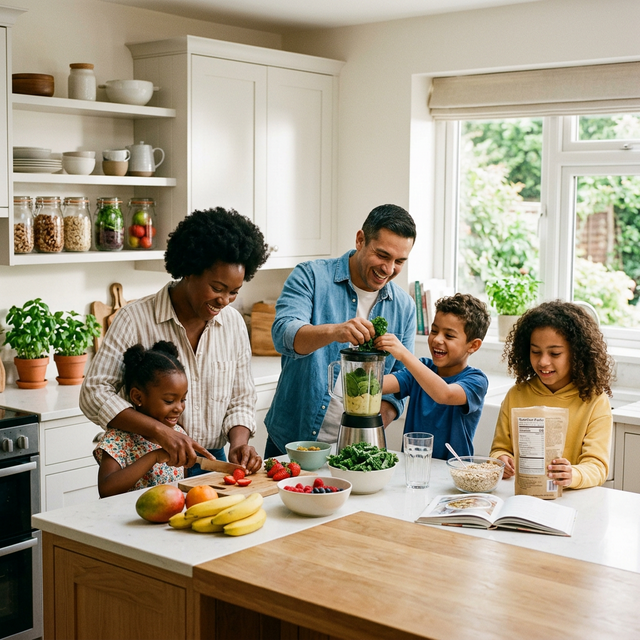
Parenting is hard enough without sugar being a constant battlefield. You know your family should eat less sugar, but between school birthday parties, grandparents who express love through cookies, picky eaters who reject anything that isn't coated in sweetness, and the sheer exhaustion of weeknight meal prep, reducing sugar can feel like just another impossible item on an already overwhelming to-do list.
Here's what nobody tells you about managing family sugar intake: it doesn't require perfect meals, homemade everything, or becoming the parent who bans all treats. It requires a few strategic changes, some kitchen intelligence, and — most importantly — an approach that works with your children's psychology instead of against it.
This guide provides practical, evidence-based strategies for reducing sugar across your entire family. No guilting, no food shaming, no unrealistic expectations — just what actually works, based on pediatric nutrition research and real-world family experience.
The Problem: How Much Sugar Are Kids Really Eating?
The numbers are staggering. The average American child between ages 2-19 consumes approximately 65-80 grams of added sugar per day. That's roughly 16-20 teaspoons — triple the American Heart Association's recommendation of no more than 25 grams (6 teaspoons) for children aged 2-18.
| Age Group | AHA Recommended Limit | Average Actual Intake | Excess |
|---|---|---|---|
| Under 2 years | 0g (zero) | ~30g | 30g over |
| 2-8 years | Less than 25g | ~65g | 40g over |
| 9-18 years | Less than 25g | ~80g | 55g over |
| Adults (women) | Less than 25g | ~55g | 30g over |
| Adults (men) | Less than 36g | ~70g | 34g over |
Where is all this sugar coming from? The top sources for children aren't candy and desserts (those account for only about 15%). The biggest contributors are beverages (35% — including fruit juice, soda, sports drinks, and flavored milk), snack foods (20% — including granola bars, crackers, and fruit snacks), and breakfast foods (18% — cereal, pastries, flavored oatmeal). These hidden sugars are often marketed as healthy choices for families.
The Impact of Excess Sugar on Children
Children are more vulnerable to sugar's effects than adults, for several reasons:
Developing Brains
Children's brains are still developing, and the dopamine response to sugar is even more pronounced in young brains. Research shows that early exposure to high-sugar diets can shape lifelong taste preferences and eating patterns. A child who regularly consumes high-sugar foods develops a "sweet norm" that makes naturally sweet foods (like fruit) taste bland in comparison.
Dental Health
Dental cavities remain the most common chronic disease in children worldwide. Sugar is the primary dietary cause — bacteria in the mouth feed on sugar and produce acid that erodes tooth enamel. Children who consume high-sugar diets have 4 times the cavity rate of children with lower sugar consumption.
Metabolic Health
Childhood obesity has tripled since the 1970s, and excess sugar is a primary driver. More concerning: studies show that children who consume high-sugar diets develop early markers of insulin resistance, fatty liver disease, and metabolic syndrome — conditions that were historically seen only in adults.
Behavioral Effects
While the popular belief that "sugar makes kids hyper" is an oversimplification, blood sugar volatility from high-sugar meals definitely affects behavior. Rapid blood sugar spikes followed by crashes cause irritability, difficulty concentrating, emotional dysregulation, and fatigue — all of which parents and teachers observe regularly.
The 8 Most Effective Family Sugar Reduction Strategies
Strategy 1: Audit Your Pantry and Refrigerator
Before changing anything, understand your starting point. Spend 20 minutes going through your kitchen and reading the labels of the foods your family eats most frequently. Write down the sugar content of each item. Most parents are genuinely shocked — the cereal they thought was "whole grain and healthy" contains 12 grams of sugar per serving, the pasta sauce has 10 grams per half cup, and the "100% juice" boxes are 24 grams of sugar each.
This isn't about guilt — it's about awareness. You can't change what you don't measure. Once you see where the sugar is hiding, the path forward becomes clear.
Strategy 2: Fix Beverages First (The Biggest Win)
Sugary beverages represent 35% of children's added sugar intake — making them the single most impactful place to start. This one change can reduce your child's daily sugar by 20-30 grams.
- Juice: Dilute 50/50 with water, then gradually increase the water ratio. Pediatricians recommend no more than 4 ounces of 100% fruit juice per day for children 1-6, and 8 ounces for 7-18. Better yet, serve whole fruit instead — the fiber changes everything.
- Flavored milk: Chocolate milk contains 12g of added sugar per cup. Switch to plain milk, or make a "light chocolate" milk by adding a small amount of cocoa powder and a drop of vanilla extract.
- Sodas and sports drinks: These should be occasional treats, not everyday beverages. Replace with sparkling water with a squeeze of citrus — kids often love the fizz if you make it feel fun and grown-up.
- Make water the default: Always have water available. Get each child a fun reusable water bottle they've chosen. Add fruit slices for natural flavor.
Strategy 3: Revamp Breakfast
Breakfast is the second-largest sugar source for children, primarily because most kid-marketed breakfast foods are essentially dessert. Making changes here creates a ripple effect throughout the day — kids who eat low-sugar breakfasts have better focus, fewer mood swings, and less sugar craving.
- Switch cereals: Replace sugar-coated cereals (12-16g per serving) with plain Cheerios (1g), unflavored oat squares, or shredded wheat. Add fresh fruit for natural sweetness.
- Make eggs the star: Scrambled eggs, omelettes with vegetables, or veggie egg muffins made in batches on Sunday provide zero added sugar and high protein to keep kids full until lunch.
- Overnight oats: Make a big batch of overnight oats with plain oats, unsweetened milk, and fresh berries. Kids can customize with their favorite toppings — see our low-sugar breakfast ideas for recipes.
- Avoid "breakfast desserts": Muffins, pastries, toaster pastries, and cinnamon rolls contain 20-40g of sugar. Save these for occasional weekend treats, not daily nutrition.
Strategy 4: Build a Better Snack Drawer
Children snack frequently — on average 3-4 times per day. If you control the snack options available, you control a significant portion of their sugar intake. The key: don't rely on willpower. Make the low-sugar option the easy option.
- The "always available" section: Keep pre-cut vegetables (carrots, cucumbers, bell peppers), fresh fruit, cheese sticks, nuts, and plain popcorn always visible and accessible at kid-height in the fridge and pantry
- The "make it fun" approach: Apple slices with peanut butter, ants on a log (celery + PB + raisins), homemade trail mix, cucumber "boats" with cream cheese, and frozen banana popsicles
- Phase out: Fruit snacks (11-14g sugar), granola bars (8-18g), juice boxes (20-24g), and flavored yogurt tubes (7-10g). Don't eliminate overnight — rotate in alternatives gradually as you run out
Track Your Family's Sugar Intake Together
SugarWise makes it easy to log meals and see how much sugar your family is consuming. Set family-friendly goals, track progress together, and celebrate wins as you build healthier habits.
Strategy 5: Cook More, Process Less
This doesn't mean spending hours in the kitchen. It means identifying the 3-5 foods your family eats most often from packages and making simple homemade versions instead. The sugar savings are dramatic:
- Pasta sauce: Jarred sauce contains 8-12g of added sugar per serving. A quick homemade marinara with canned tomatoes, garlic, and herbs has 3g or less and takes 15 minutes.
- Salad dressing: Bottled dressings pack 3-8g of sugar per serving. A simple vinaigrette (olive oil, vinegar, mustard, salt and pepper) has zero.
- Bread: Many store-bought breads contain 3-5g of sugar per slice. Look for bakery-style breads or brands with 0-1g per slice.
- Oatmeal: Instant flavored packets contain 10-15g of sugar. Plain oats with cinnamon and a few berries have virtually none.
Strategy 6: Use the 80/20 Rule
Perfection is the enemy of sustainability. The 80/20 approach means: 80% of the time, your family eats nutritious, low-sugar meals and snacks. 20% of the time, treats and indulgences are completely fine.
This means birthday cake at parties — absolutely. Ice cream on a hot summer day — of course. A cookie after school occasionally — no problem. What changes is the baseline — the everyday foods that make up the majority of your family's diet.
This approach is psychologically critical for children. Making sugar "forbidden" increases its appeal and creates unhealthy psychological associations with food. Children raised in restrictive food environments are more likely to develop binge-eating patterns and unhealthy relationships with food. The 80/20 approach teaches children to enjoy treats in moderation while making nutritious choices the norm.
Strategy 7: Get Kids Involved
Children who participate in food preparation eat a wider variety of foods and make healthier choices independently. Research from the American Journal of Preventive Medicine found that kids who helped cook meals at home ate 26% more vegetables and were more willing to try new foods.
- Grocery shopping: Let kids help pick fruits and vegetables. Make it a game: find the vegetable they've never tried, or choose a new fruit each week.
- Kitchen helpers: Age-appropriate tasks — washing vegetables (3+), stirring ingredients (4+), measuring and pouring (5+), following simple recipe steps (7+). Let them see what goes into food.
- Label detectives: Teach older children to read nutrition labels. Turn it into a scavenger hunt: "Can you find a cereal with less than 5 grams of sugar?"
- Recipe creation: Let kids experiment with making their own trail mix combinations, smoothie recipes, or fruit and cheese plate arrangements.
Strategy 8: Manage the Social Environment
Some of the biggest sugar challenges come from outside your home: school events, birthday parties, sports teams, grandparents, and friends' houses. You can't (and shouldn't) control every environment, but you can prepare:
- School: Pack lunches when possible — school cafeteria options are often sugar-heavy. Send water instead of juice boxes. Communicate with teachers about classroom celebration alternatives.
- Birthday parties: Don't stress. Let your child enjoy party food — it's one day. The 80/20 rule applies. Your baseline home nutrition is what matters long-term.
- Sports: Challenge the automatic association between youth sports and candy/soda. Bring fruit slices, water, and trail mix as team snacks instead of juice boxes and cookies.
- Grandparents: Have a gentle conversation about your goals. Most grandparents will cooperate if you frame it as a health concern rather than a criticism. Suggest non-food ways to show love — special activities, books, experiences.
Age-Specific Sugar Strategies
Babies and Toddlers (0-2 years)
The AHA recommends zero added sugar for children under 2. This is a critical window because early food experiences shape long-term taste preferences. Avoid flavored baby food (many contain concentrated fruit juice as sweetener), teething crackers with sugar, and introducing juice before age 1. Breast milk or formula, then whole foods — fruits, vegetables, grains, and proteins — provide everything young children need without added sweeteners.
Preschoolers (3-5 years)
This age group is developing food preferences that can last a lifetime. Keep added sugar under 25g per day. Focus on: serving fruit for dessert (make it special by arranging it in fun shapes), limiting juice to 4 ounces daily, avoiding sugary cereals and snacks as rewards, and never using food as an emotional coping tool ("here's a cookie because you're sad").
School-Age Children (6-12 years)
Peer influence increases dramatically. Focus on building nutritional knowledge: teach them to read labels, explain why balanced nutrition helps them perform better in sports and school, and give them ownership over healthy choices rather than imposing rules. This age group responds well to the "label detective" approach and feeling grown-up about making smart food choices.
Teenagers (13-18 years)
Teens have the highest sugar intake of any age group, driven by independence, social eating, and targeted marketing. Heavy-handed restrictions backfire with this age group. Instead, focus on: education about how sugar affects brain performance (academic and athletic), keeping the home stocked with easy healthy options, teaching them to track their own nutrition if they're interested, and modeling good habits yourself.

Kid-Friendly Low-Sugar Snack Ideas
- Apple slices with peanut butter — classic, portable, satisfying
- Cheese and whole wheat crackers — protein + complex carbs
- Veggie sticks with hummus — carrots, cucumbers, bell peppers
- Homemade popcorn — air-popped with a light salt dusting
- Plain yogurt with berries — let kids add their own toppings
- Hard-boiled eggs — prep a batch for the week
- Frozen banana "ice cream" — freeze banana slices, blend until creamy
- Homemade trail mix — nuts, seeds, a few dark chocolate chips
- Cucumber boats — halved cucumber filled with cream cheese
- Frozen fruit popsicles — blend fresh fruit with yogurt, freeze in molds
Family Sugar Intake FAQs
How much sugar should a child have per day?
The AHA recommends: children under 2 should have zero added sugar; children aged 2-18 should have less than 25 grams (6 teaspoons) per day. The average American child consumes 65-80 grams daily — roughly 3 times the recommended limit. Focus on reducing the biggest sources first: beverages, breakfast foods, and snacks.
How do I get my child to eat less sugar without tantrums?
The key is gradual reduction, not elimination. Replace one sugary item at a time, involve kids in food preparation, make healthy food visually appealing, and use positive framing — "we're choosing foods that give us energy" rather than "no more sugar." Most children adapt within 2-3 weeks as their taste buds recalibrate.
What are the best sugar-free snacks for kids?
Apple slices with peanut butter, cheese and crackers, veggie sticks with hummus, homemade popcorn, plain yogurt with berries, hard-boiled eggs, frozen banana "ice cream," homemade trail mix, cucumber boats with cream cheese, and fruit popsicles.
Starting Your Family's Sugar-Smart Journey
Changing a family's eating habits isn't something that happens in a week. It's a gradual process of small improvements that compound over time. Here's your recommended starting sequence:
- Week 1: Audit your kitchen — read labels, identify the top 5 sugar sources in your home
- Week 2: Fix beverages — eliminate or reduce juice, soda, and flavored milk
- Week 3: Revamp breakfast — swap high-sugar cereals and pastries for eggs, oats, or yogurt with fruit
- Week 4: Build a better snack drawer — introduce 3-5 new low-sugar snack options
- Ongoing: Gradually reduce processed food reliance, involve kids in cooking, and maintain the 80/20 balance
Remember: you're not trying to create a sugar-free home. You're creating a home where nutritious food is the easy, default choice, and where treats are enjoyed mindfully and without guilt. That's the foundation of a healthy relationship with food that will serve your children for the rest of their lives.
Build Healthy Family Habits with SugarWise
SugarWise helps the whole family track sugar, set achievable goals, and celebrate progress together. See your family's sugar reduction add up day by day.
Download SugarWise on Google Play →